
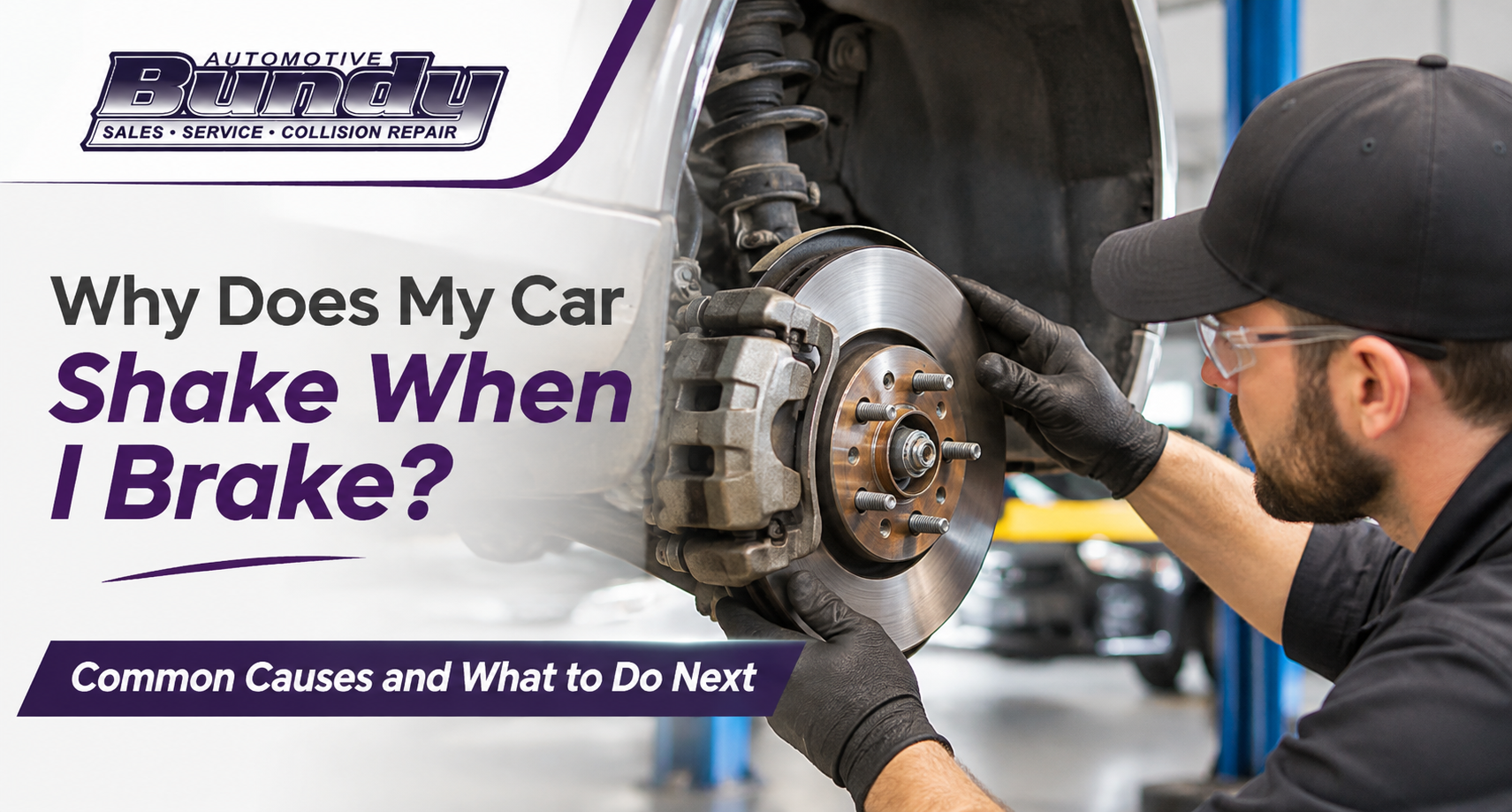
If your car shakes when braking, you may notice the steering wheel vibrating, the brake pedal pulsing, or the vehicle trembling as you slow down. These symptoms can indicate uneven brake rotors, worn brake components, or suspension problems. For drivers in Manchester, CT, understanding the possible causes can help identify when a professional brake inspection is needed.
Why Does My Car Shake When I Apply the Brakes?
Your braking system uses friction to slow your vehicle. When you press the brake pedal, brake pads press against rotating brake discs, commonly called rotors.
If the braking surfaces are uneven or other components are worn, you may notice vibrations while slowing down. The location and intensity of the shaking can sometimes help identify the problem.
What Are the Most Common Brake Vibration Causes?
Several mechanical issues can contribute to brake vibration.
1. Uneven Brake Rotor Thickness
Brake rotors should provide a consistent surface for the brake pads. Over time, uneven wear or variations in rotor thickness can cause the braking force to fluctuate. This may create a pulsing sensation through the brake pedal or vibration in the steering wheel.
2. Uneven Brake Pad Deposits
Brake pads can leave friction material on the rotor surface. When these deposits become uneven, the brakes may produce vibration during application. This issue is sometimes mistaken for a physically warped rotor.
3. Warped Brake Rotors
Many drivers search for warped brake rotors when their vehicle shakes during braking. Although rotor distortion can occur, uneven thickness or friction material deposits are often responsible for similar symptoms.
A mechanic can measure rotor condition rather than relying on appearance alone.
4. Worn Suspension Components
Loose or worn suspension parts, including control arm bushings and ball joints, can contribute to shaking or make existing brake vibrations more noticeable. These components help maintain wheel stability, so deterioration may affect handling and braking comfort.
Why Does My Steering Wheel Shake When Braking?
If your steering wheel shakes when braking, the vibration may be related to the front braking system, front suspension, or steering components. For example, uneven front brake rotors can produce vibration that travels through the steering system.
However, steering wheel movement alone cannot confirm the cause.
What If the Brake Pedal Pulses?
A repeating pulse during normal braking may indicate uneven braking force. During hard braking, an anti-lock braking system (ABS) can also produce rapid pedal pulsation. This is normal when ABS activates.
Unexpected pulsing during routine stops should be inspected.
Can Rear Brake Problems Cause Car Shaking?
Yes. Problems with rear brake rotors or other rear braking components can sometimes cause vibration felt through the vehicle body or seat. The exact sensation varies depending on the vehicle’s design and the condition of its components.
A complete brake inspection can help identify whether the problem comes from the front or rear brakes.
Is It Safe to Drive When Your Car Shakes During Braking?
Brake vibration should not be ignored, especially when it becomes more noticeable or occurs alongside other symptoms.
Warning signs include:
- Grinding or scraping noises
- Reduced braking performance
- A soft or unusually firm brake pedal
- The vehicle pulling to one side
- Burning smells near the wheels
- Severe shaking during braking
If braking performance is reduced, the vehicle pulls strongly, or the shaking is severe, stop driving when safe and arrange professional assistance.
How Do Mechanics Diagnose Brake Vibration?
A technician typically begins by asking when the shaking occurs and whether it changes with vehicle speed or braking pressure.
Brake System Inspection
The inspection may include checking brake pads, rotors, calipers, and related hardware. Technicians may measure rotor thickness variation and runout to identify irregularities.
Suspension and Steering Checks
If the brakes appear normal, the mechanic may inspect suspension bushings, wheel bearings, and steering components. This helps avoid replacing brake parts when another issue is responsible.
How Can You Prevent Brake Vibration?
Although some brake wear is unavoidable, regular maintenance can help identify problems early.
Consider these practical steps:
- Schedule brake inspections according to your vehicle’s maintenance recommendations.
- Address unusual noises or vibrations promptly.
- Avoid repeated unnecessary hard braking.
- Have sticking brake calipers or uneven pad wear investigated.
- Follow the manufacturer’s guidance for brake service and replacement.
Regular vehicle maintenance can also help identify related mechanical concerns. Learn more about oil change services in South Windsor, CT.
When Should You Schedule a Brake Inspection in Manchester, CT?
If your car consistently shakes when braking, an inspection can help determine whether the issue involves rotors, brake pads, suspension components, or another mechanical problem.
If the vibration began after an accident, additional checks may be necessary. You can read about car accident repair in Manchester, CT for related vehicle repair information.
Final Thoughts
A car that shakes when braking may have uneven brake rotors, brake pad deposits, worn suspension components, or other mechanical issues. For drivers in Manchester, CT, recognizing these symptoms early can help prevent further wear and address potential safety concerns.
Rather than assuming the rotors need replacement, have the braking system properly inspected to identify the underlying cause.
For additional automotive maintenance and repair information, visit Bundy Motors, Inc..