
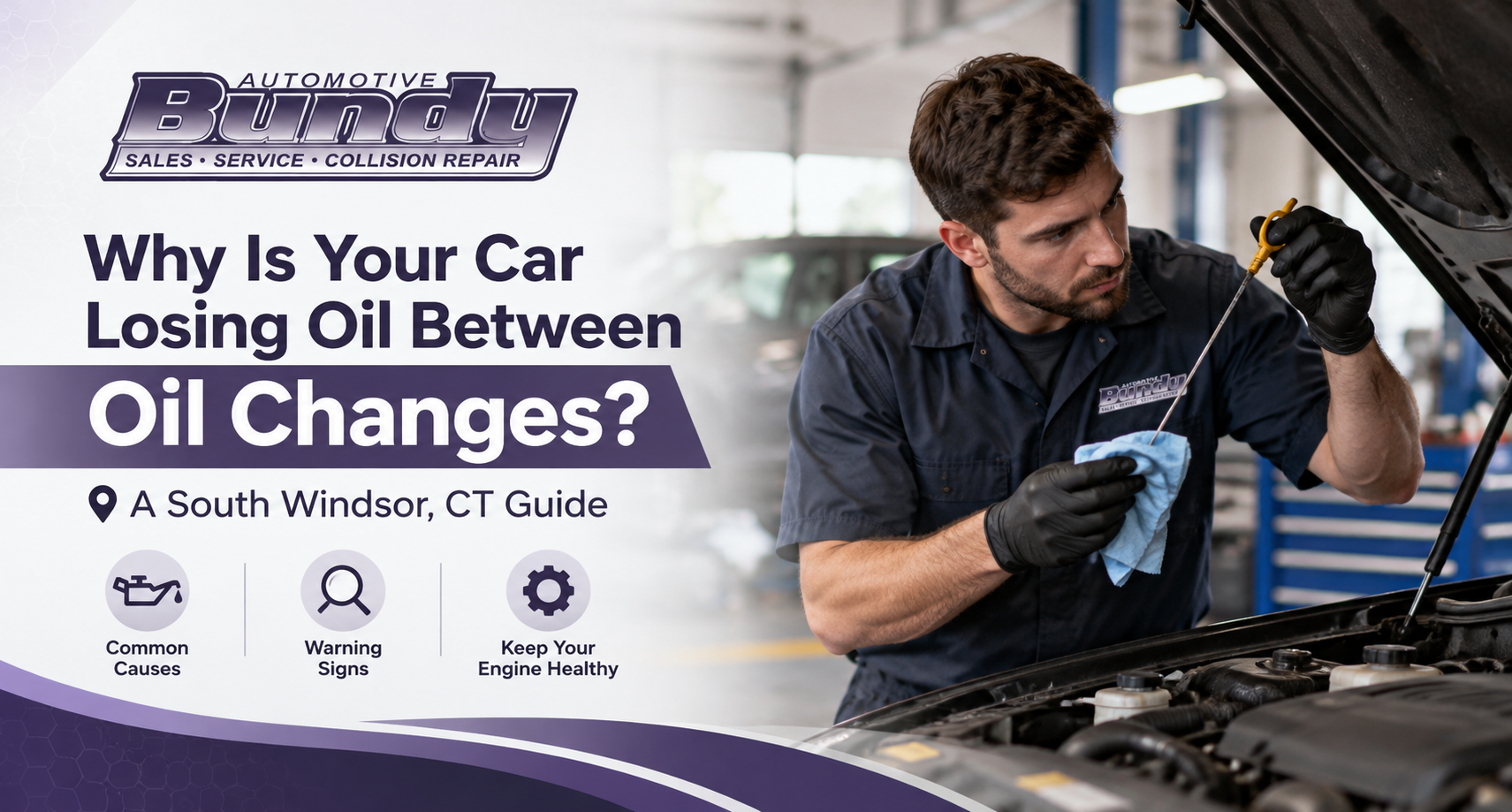
Is your car losing oil between oil changes, even though your next service isn’t due yet? This common concern can leave drivers wondering whether their engine is burning oil, developing a leak, or experiencing another mechanical issue. For vehicle owners in South Windsor, CT, understanding the possible causes and warning signs can help prevent serious engine damage and costly repairs.
For drivers in South Windsor, CT, understanding why a car loses oil between oil changes is important for maintaining engine health and avoiding expensive repairs. While some engines consume small amounts of oil during normal operation, frequent or excessive oil loss may indicate an underlying problem that needs attention.
Is It Normal for a Car to Lose Oil Between Oil Changes?
Some oil consumption can be normal, depending on your vehicle’s age, engine design, mileage, and driving conditions. However, repeatedly needing to add oil should not automatically be considered normal.
Your engine relies on oil to lubricate moving parts, reduce friction, and manage heat. When the oil level becomes too low, these components may experience increased wear.
If you notice the oil level dropping regularly, start monitoring how much oil your vehicle uses and how often you need to refill it. Your owner’s manual can help you understand the manufacturer’s recommendations.
Common Reasons Your Car May Be Losing Oil
Several mechanical problems can cause oil levels to decrease between scheduled services.
- External oil leaks
Oil can escape through worn gaskets, damaged seals, loose drain plugs, or other engine components. You might notice dark spots beneath your parked vehicle or oily residue around the engine.
- Engine oil burning
Some engines burn oil when it enters the combustion chamber through worn piston rings, valve seals, or other internal components. In certain cases, bluish exhaust smoke may appear.
- Problems with the PCV system
The positive crankcase ventilation (PCV) system helps manage gases inside the engine. A malfunctioning PCV valve or related component can contribute to increased oil consumption.
- High engine mileage
As vehicles age, internal engine parts may wear down, increasing the possibility of oil consumption or leaks.
- Incorrect oil specifications
Using oil that does not meet the manufacturer’s recommended viscosity or specifications may contribute to lubrication problems or increased consumption in some engines.
Identifying the actual cause requires proper inspection rather than guessing.
What Warning Signs Should You Watch For?
Oil loss does not always leave visible puddles beneath your car. Sometimes the warning signs are less obvious.
Pay attention to:
- An oil level that drops repeatedly between checks
- Burning oil smells while driving
- Blue or grayish-blue smoke from the exhaust
- Oil stains on your driveway or parking space
- Unusual engine ticking or knocking noises
- Oil-related dashboard warning lights
If your oil pressure warning light comes on while driving, pull over safely, turn off the engine, and arrange professional assistance. Continuing to drive with low oil pressure can cause serious engine damage.
Can Driving Habits Affect Engine Oil Consumption?
Your driving habits can influence how your engine operates and how quickly oil-related problems become noticeable.
Frequent short trips, heavy loads, extended idling, and high-speed driving can place different demands on your engine. Short trips may prevent the engine from reaching normal operating temperature long enough to evaporate accumulated moisture and fuel contamination.
Cold Connecticut winters can also affect engine operation, particularly during startup.
Following the maintenance schedule recommended for your specific vehicle and driving conditions helps keep the lubrication system working properly.
How Often Should You Check Your Engine Oil?
Checking your oil regularly is one of the simplest ways to identify a developing problem.
Consult your owner’s manual for the correct checking procedure. Many vehicles require the engine to be off and the car parked on level ground, although procedures vary.
When checking the oil:
- Park your vehicle on a level surface.
- Follow the manufacturer’s instructions for checking the oil level.
- Check whether the level falls within the recommended range.
- Look for unusual changes in oil appearance.
- Record repeated decreases in oil level.
If the level is low, use only the oil specification recommended by your vehicle manufacturer. Avoid overfilling the engine.
Scheduling a professional oil change service in South Windsor CT also provides an opportunity to discuss unusual oil consumption and request an inspection when needed.
Can an Accident Cause an Engine Oil Leak?
Yes. Even a relatively minor collision can sometimes damage components underneath the vehicle, including the oil pan or nearby engine parts.
If you notice oil leaking after an accident, avoid assuming the damage is only cosmetic.
Drivers researching car accident repair in Manchester CT should understand that post-collision inspections may need to consider mechanical components as well as visible body damage.
If an accident has caused a significant fluid leak, do not continue driving until the vehicle has been assessed.
How Can You Prevent Serious Engine Problems?
Not every oil leak or consumption issue can be prevented, but regular maintenance can help identify problems early.
Follow your vehicle’s recommended oil change intervals, monitor fluid levels, and investigate unusual smells or engine noises.
If your car repeatedly needs additional oil, have a qualified technician check for leaks, engine wear, and ventilation system problems.
Addressing small issues early may help prevent more expensive repairs later.
Final Thoughts
Losing engine oil between oil changes is something drivers should take seriously, especially when the oil level drops frequently or warning signs appear. Understanding the possible causes can help you make informed maintenance decisions and protect your vehicle’s engine.
For South Windsor, CT drivers, regular oil checks and timely inspections are important parts of responsible vehicle ownership. Bundy Motors, Inc. provides information about automotive maintenance and repair services for drivers seeking professional assistance.
Remember, keeping your engine properly lubricated is not just about changing oil on schedule. It is also about noticing problems early and addressing them before they become more serious.