
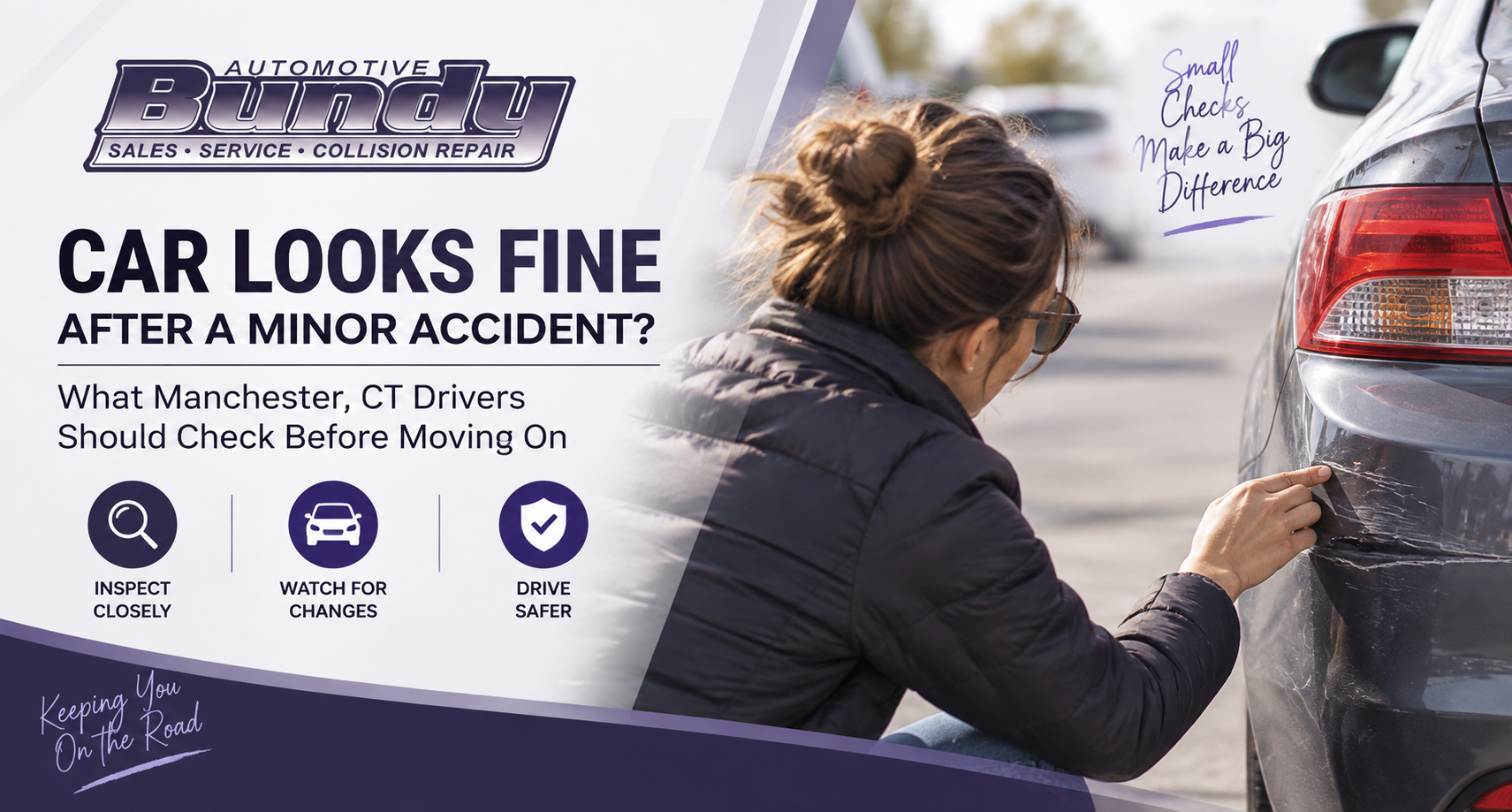
A minor accident can be confusing. Maybe another vehicle bumped your car at a low speed, you backed into something, or you were involved in a small parking-lot collision. You step outside, look at the vehicle, and see only a scratch or small dent. If the car still starts and drives normally, it is tempting to assume everything is fine.
But visible damage does not always tell the whole story. Modern vehicles contain many components behind bumpers and body panels, and even a relatively minor impact can sometimes affect parts you cannot immediately see. For Manchester, CT drivers, knowing what to check after an accident can help identify issues before they become bigger concerns.
Start With a Careful Walk Around the Vehicle
Once you are in a safe location, look at the vehicle from different angles. Do not focus only on the point where the impact occurred.
Check the bumper, body panels, headlights, taillights, mirrors, wheels, and tires. Look for cracks, gaps between panels, loose trim, or parts that appear slightly out of position. A bumper may spring back into shape after an impact while components behind it have still been affected.
If anything looks unsafe or the vehicle does not seem suitable to drive, arrange appropriate assistance rather than continuing your trip.
Pay Attention to How the Car Drives
If the vehicle is safe to operate, notice whether it feels different than it did before the accident.
Does the steering wheel sit differently? Does the vehicle pull toward one side? Are you noticing new vibration, unusual sounds, or changes when braking or turning?
These symptoms do not automatically mean serious damage occurred, but a new change immediately following an impact deserves attention. A professional inspection can help determine whether the issue is related to the collision or something else.
Businesses such as Bundy Motors, Inc provide automotive repair and collision-related services, which can be useful when a vehicle needs more than a quick visual check.
Look Closely at the Wheels and Tires
Wheels and tires can sometimes take part of the impact, especially if a vehicle hits a curb or another car near a wheel.
Check for obvious tire damage, unusual bulges, cuts, or a wheel that appears different from the others. If the steering begins pulling, the steering wheel is no longer centered, or the car develops a new vibration after the collision, have the vehicle evaluated.
Avoid assuming that every post-accident steering problem is simply an alignment issue. The cause needs to be identified before deciding what repair is appropriate.
Check Whether Doors and the Trunk Still Work Normally
Open and close the doors, trunk, and hood if it is safe to do so.
They should operate much as they did before. A door that suddenly requires extra force, a trunk lid that does not line up properly, or a hood with noticeably uneven gaps may indicate that something shifted during the impact.
Panel alignment can provide useful clues because collision damage is not always limited to scratches and dents.
Don’t Ignore Warning Lights
After an accident, look at the dashboard.
If a new warning light appears, do not simply reset or ignore it without understanding why it came on. Depending on the vehicle and type of impact, different systems may detect a problem.
Drivers looking into Car accident repair in Manchester CT should explain what happened during the collision and mention any warning lights, sounds, handling changes, or other symptoms that appeared afterward. Those details can help guide a more complete inspection.
Check Under the Vehicle for New Fluid
After parking, look at the ground underneath the car for anything unusual. Air-conditioning systems can normally produce clear water, so not every wet spot indicates damage.
However, a new or unexplained fluid leak after an accident should not automatically be dismissed. If you notice a significant leak, strong odor, smoke, overheating, or another obvious safety concern, stop using the vehicle and seek professional assistance.
Avoid touching unknown automotive fluids directly.
Remember That Routine Maintenance Is Different
An accident inspection and normal vehicle maintenance serve different purposes.
Routine services help maintain the vehicle under everyday driving conditions. For example, an Oil change service in South Windsor CT focuses on engine oil and related routine maintenance considerations. A post-collision inspection, on the other hand, looks for changes or damage associated with an impact.
Having recently completed routine maintenance does not necessarily mean the vehicle should skip an accident-related inspection when new symptoms appear.
Take Photos Before Repairs Begin
Photos can be useful even when the damage seems minor. Photograph the affected area, the overall vehicle, and any visible damage from several angles.
Documentation may help you remember exactly what the vehicle looked like immediately after the accident and can also be useful when communicating with a repair shop or insurer.
Keep any estimates, inspection reports, repair invoices, and related accident documents together as well.
Why a Small Accident Deserves Attention
The purpose of checking your vehicle after a minor collision is not to assume that something serious is wrong. In many cases, the damage may genuinely be limited.
The problem is that appearance alone cannot confirm the condition of everything behind the visible body panels.
A five-minute walk around the car, attention to new driving symptoms, and professional evaluation when something seems different can provide much better information than simply assuming a small dent means a small problem.
Final Thoughts
If your car looks fine after a minor accident, that is encouraging, but give it more than a quick glance before moving on. Check the body panels, lights, wheels, tires, doors, dashboard, handling, and the area underneath the vehicle.
Most importantly, pay attention to what changed. A new noise, vibration, warning light, leak, steering issue, or poorly fitting panel can be a useful clue. Identifying those changes early can help Manchester drivers make informed decisions about whether their vehicle needs further inspection or repair.