
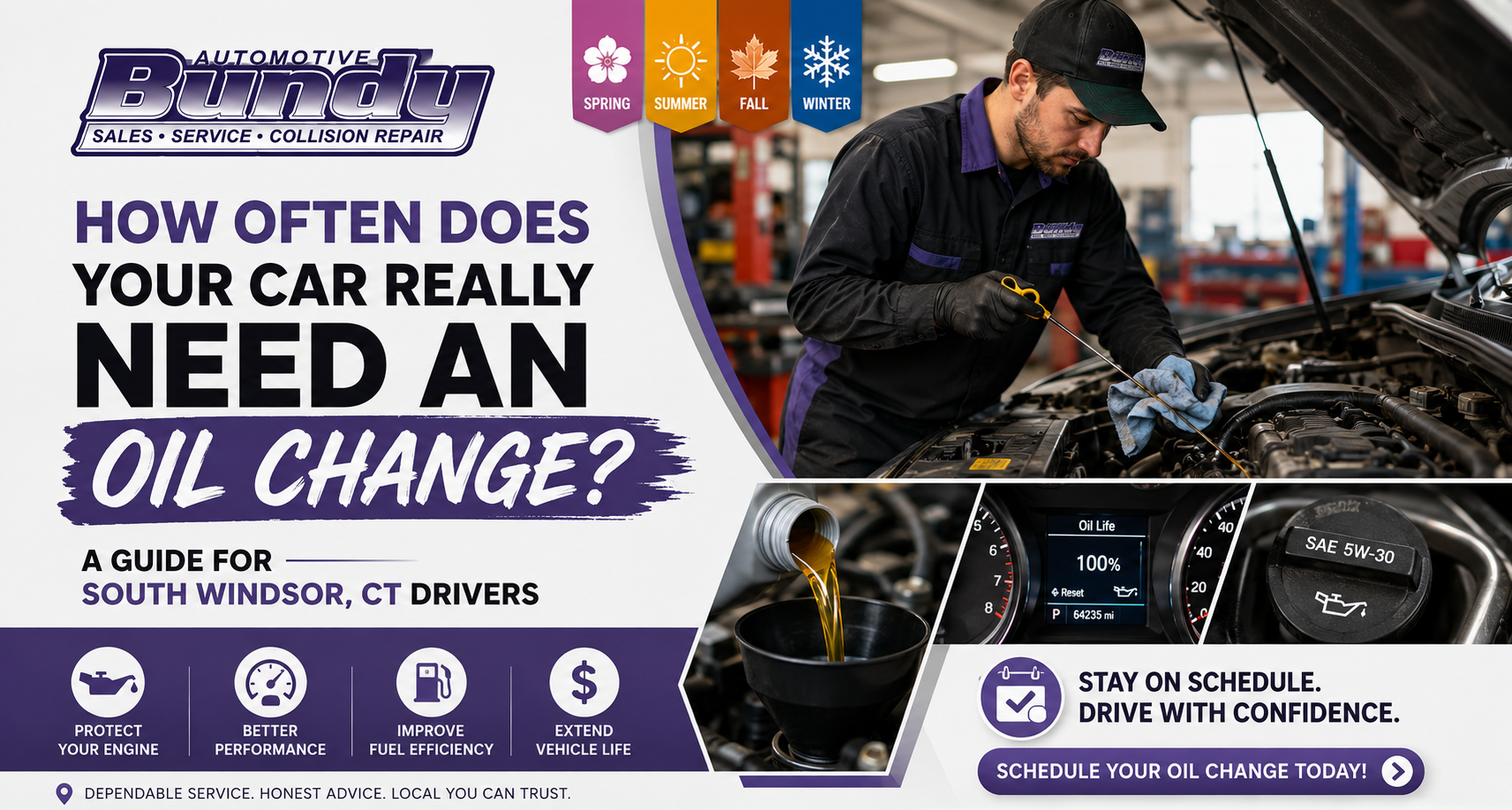
Getting an oil change is one of the most familiar parts of owning a car, but many drivers are still unsure how often it actually needs to be done. You may have heard the traditional advice to change your oil every 3,000 miles, while newer vehicles may recommend much longer intervals.
For drivers in South Windsor CT, the right answer depends on the vehicle, the type of oil being used, driving habits, mileage, and even weather conditions. Understanding these factors can help you avoid unnecessary oil changes while also protecting your engine from premature wear.
Why Is Engine Oil So Important?
Engine oil has several important jobs. It lubricates moving engine components, reduces friction, helps control heat, and carries contaminants toward the oil filter.
Over time, oil gradually becomes contaminated and less effective. When oil cannot properly lubricate engine components, friction and heat can increase. Continuing to drive with old or insufficient oil may contribute to unnecessary engine wear and potentially expensive repairs.
That is why regular oil maintenance should be viewed as preventive care rather than something to think about only when a warning light appears.
Is the 3,000-Mile Oil Change Rule Still Necessary?
For many older vehicles, changing the oil around every 3,000 miles was common advice. Modern vehicles and modern engine oils have changed that.
Many newer cars can travel considerably farther between oil changes, particularly when using synthetic oil. However, there is no single mileage interval that works for every vehicle.
Your owner’s manual should be the first place you check. It provides an oil-change schedule based on the engine and specifications of your particular vehicle.
Drivers who are unsure about their maintenance schedule can also discuss their vehicle’s mileage, oil type, and driving conditions when arranging an Oil change service in South Windsor CT.
Your Driving Habits Can Change the Schedule
Mileage alone does not tell the whole story. How you drive can affect how quickly engine oil needs attention.
Frequent short trips can be harder on engine oil because the engine may not remain at its normal operating temperature for very long. Heavy stop-and-go traffic, extensive idling, towing, and driving in demanding conditions can also affect maintenance requirements.
Someone who mainly drives long highway distances may therefore have different maintenance needs from someone who makes several short trips around town every day.
Connecticut Weather Can Affect Your Vehicle Too
South Windsor drivers experience cold winters, hot summer days, rain, and changing seasonal conditions. These temperature changes can put additional demands on a vehicle.
Cold weather can make oil thicker during startup, while high temperatures place different demands on the engine and cooling system. Using the oil type and viscosity recommended by the vehicle manufacturer becomes especially important.
Seasonal changes are also a useful reminder to check other maintenance items, including tires, brakes, fluids, lights, and the battery.
What Are the Signs Your Car May Need an Oil Change?
You should not rely entirely on warning signs because routine maintenance is designed to address the oil before problems develop. Still, there are several things worth noticing.
An oil or maintenance reminder on the dashboard is an obvious sign. You may also notice unusually dark or dirty oil when checking the dipstick, increased engine noise, or that you have exceeded the manufacturer’s recommended service interval.
An oil-pressure warning light deserves particular attention. It can indicate a different and potentially more serious problem than simply being due for routine maintenance.
Don’t Forget to Check the Oil Between Services
Even if your next scheduled oil change is months away, checking the oil level occasionally is a good habit.
Park on level ground and follow the procedure recommended in your owner’s manual. If your vehicle has a traditional dipstick, you can check whether the level is within the correct range.
If the oil level repeatedly becomes low between services, simply adding more oil may not address the underlying cause. A leak or another mechanical issue may need investigation.
Routine Maintenance Can Reveal Other Problems
Oil changes also provide an opportunity to pay attention to the general condition of your vehicle. Leaks, worn components, unusual noises, tire issues, or other concerns may become noticeable during routine service.
The same principle applies after a collision. Even when a vehicle appears driveable, an accident can sometimes affect components that are not immediately visible. Drivers seeking Car accident repair in Manchester CT should consider having collision-related damage properly assessed rather than assuming cosmetic appearance tells the entire story.
So, How Often Should You Change Your Oil?
Instead of following one universal number, follow the maintenance interval recommended by your vehicle manufacturer. Then consider whether your driving habits qualify as severe or demanding conditions that may require more frequent service.
Keep records of oil changes so you know when the last service was completed. If your vehicle has an oil-life monitoring system, pay attention to it rather than repeatedly resetting or ignoring the reminder.
Final Thoughts
There is no single oil-change schedule that is correct for every South Windsor CT driver. Your vehicle’s age, engine design, oil type, mileage, driving habits, and operating conditions all influence the appropriate interval.
The best approach is simple: follow your owner’s manual, monitor the oil level, pay attention to dashboard warnings, and stay consistent with preventive maintenance.
Bundy Motors, Inc provides automotive repair and maintenance services for Connecticut drivers. Staying proactive with routine services such as oil changes can help keep your vehicle dependable, identify developing problems earlier, and support better engine performance over the long term.